This won’t leave any marks; no one will believe you.
—Cambodian police to a torture victim
i.
once, my partner asked whether i had turned off the light above his table. the man revealed himself with a new character, though i could tell it was a tactic. i said i had not, and kept my eyes on the screen—digital craftsmanship in red curves, almost silken threads, if the eyes could hold fire and rue and distance, forming the vivid petals of a mature poinsettia.
i told myself, do not believe who you are from one who cannot make you.
i wished i could pretend that technology had taken over the role of pleasure, yet i knew something was wrong—or something wrong was yet to happen—or what was happening was already there, beneath me, a cathedral of burnt breath pulling animals from air and light.
if i did anything right, it was trusting what i remember: where plant sprouting is another life i wish i could live. that before i came here nobody else had come close to that prohibitive language of terror, his habitual decision of slashing and slashing my brain and pissing on it.
ii.
i made things talk to walk above time. dolls, leaves, people in photographs who forgot to tell me what made them laugh. not a simple distraction, but a form of release—fabricated so that i am in control. i became a mad act of hostility, quiet, yet fierce in defence of my body where plant sprouting is another life i wish i could live. i told myself stories i would never escape. i always began with two people, and at least one of them would die. it hurt, but i knew nothing else.
so i was telling myself this story of two men in an adventure, thirsty and penniless. by the time they had reached a drought of no comparable heat, my partner was already shaking in my face a skin-balm jar-like container, licked empty. i have my own, love, i have my own, i said. i did not use it.
if i did anything right, it was trusting what i remember. that i should avoid conflict. no matter what do not take the bait.
then came the shattering—mirror, woodwork, kitchenware—anything he could grasp he hurled against the wall or through the window. i did not look at his face. i was the closest planet to the sun. in my mind i was saying goodbye to everybody. farewell, farewell.
then my partner took my hand, crying, soft. the man revealed himself with a new character, though i could tell it was a tactic. i fear you, he said.
i told myself, do not believe who you are from one who cannot make you.
iii.
if i did anything right, it was trusting what i remember.
their desire was water—one tracing smoking rocks for direction, the other burning the direction in their head. the temperature and knowledge of their nowhereness were enough for the mind to swell. it was as if the wind had thrown them into fire by accident. where plant sprouting is another life i wish i could live.
who decides whose thirst is too soon, or too long ago—that it is, if not unreal, about how it was not remembered the way it was? how do you settle the tug of war between here and elsewhere without half of your body torn from its other half? one says, walk slower, move without rush in the sound of “think again,” yet the other devours the hours of a train into the far night, listening only to the sound of contact between jeopardy and cause, between you and you.
when the smudged moon began its battle between rats and insects swanning through the story i was telling myself, my partner punched the door, slapped his own face. to this guilt island you brought me, the man revealed himself with a new character, self-harming and speaking from a well of unrequited love, though i could tell it was a tactic. you manipulated all this—how i feel so evil about myself, he said, his rumbling voice spilling into the same wail he made when he first spoke of his father’s death. this is what you’ve always been—tyrant, dictator, evil. you did this, as you did to your mother. your fracture—you said “abuse” because you left no other option—it is you.
then echoes of what he said. echoes as wide as oceans. and i was small beneath them all. what i said did not matter. a raindrop in the pacific.
i told myself, do not believe who you are from one who cannot make you.
iv.
perhaps this torrefying nowhereness was not a desert after all; these two travellers were but fugitive sounds made when the back of the head strikes the floor in regret—so much more than when regret first became a word.
the day came to explode, and blood raced through my head. and in my head, the man revealed himself with a new character—a monk of some sort meditating in a whistling sandstorm—though i could tell it was a tactic.
i walked slowly through the days when a cut was made inside me—made permanent and would send throbbing signals to the tips of my fingers in the years to come.
there is no account of when and where i began unleashing violence—as he suggested the first one to unfurl a fist—in my calendar. i sat to learn whether it was true, even if it was not true. i spelt air again and again. told the room who i am, on loop, and how inflicting hurt of a kind is an invention my hands—my father, who farmed and drove a borrowed tricycle in rural Quezon, never trained me to do; nor my mother, who always came home with something for us after her work as a saleslady. how could i ever hurt him when i saw him more precious than me?
i told myself, do not believe who you are from one who cannot make you.
if i did anything right, it was trusting what i remember—how i sought a direction that the fire would not allow. where plant sprouting is another life i wish i could live.
perhaps it was never about thirst, when no one offered me water as i was attacked in my apartment. the matter was that i was attacked—blood gushing out of my nose like a burst can of tomatoes.
perhaps what desire means is the weight of my voice—how sufficient it is for water to mean burning.
i need water, i begged from a lumber room shut away from air and light. for long godless days.
when i said i have my own, i meant there are people back home who will grieve when i disappear.
“DARVO” is an acronym for deny, attack, and reverse victim and offender. Jennifer J. Freyd first introduced the term in 1997. In her article, Violations of Power, Adaptive Blindness and Betrayal Trauma Theory (in Feminism & Psychology Vol. 7(1): 22-32), she explained that this attack tactic, “intended to chill and terrify…will often take the form of focusing on ridiculing the person who attempts to hold the offender accountable, with the offender rapidly creating the impression that the abuser is the wronged one, whilst the victim or concerned observer is the offender. Figure and ground completely reversed. The more the offender is held accountable, the more wronged the offender claims to be. The offender accuses those who hold them accountable of perpetrating acts of defamation, false accusations, smearing, etc. The offender is on the offense and the person attempting to hold the offender accountable is put on the defense (italics mine, 30).” The epigraph of this poem is from a Cambodian League for the Promotion and Defense of Human Rights (LICADHO) Project Against Torture Report by Jason Barber, Less than Human: Torture in Cambodia (2000).
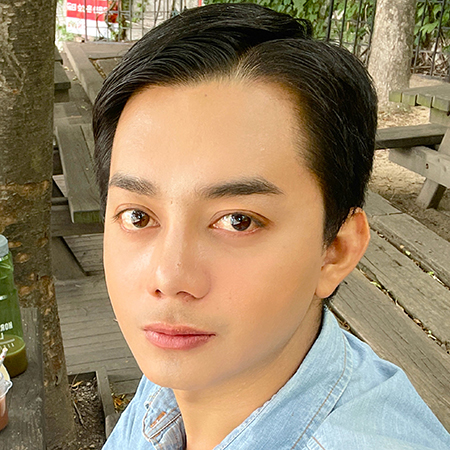
B.B.P. Hosmillo is a queer poet, curator, editor, and educator. Their poetry books include, Breed Me: a sentence without a subject (AJAR Press) and A Form of Torture (University of Santo Tomas Publishing House). Their writing has appeared recently in Likhaan: The Journal of Contemporary Philippine Literature, Cream City Review, The Cincinnati Review, and Journal of Postcolonial Writing. They completed their PhD in Creative Practice from the University of New England, Australia and currently live between Quezon, Philippines and the UK.