Join ALOCASIA and our bouquet of incredible instructors for a summer of FREE creative writing workshops! Register on Eventbrite to save your seat. All workshops take place on Zoom, and will not be recorded.
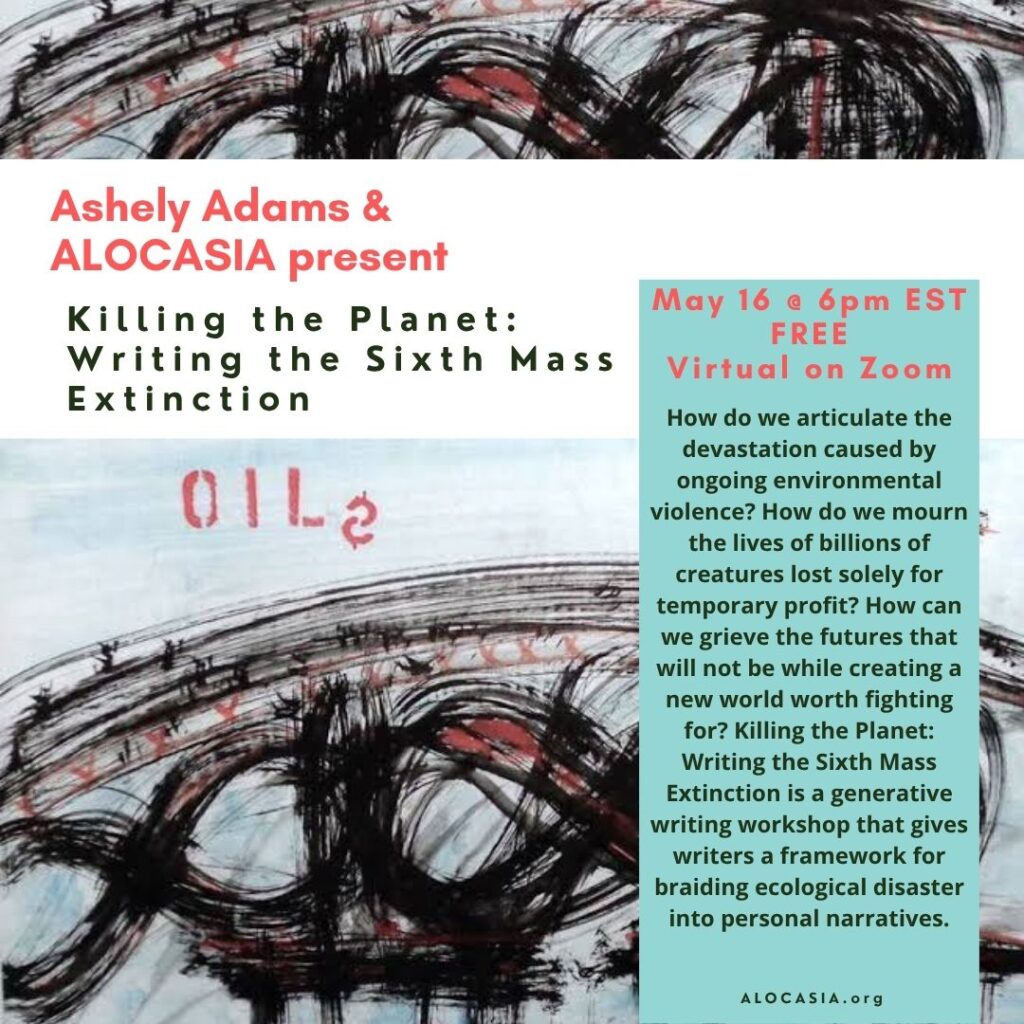
Killing the Planet: Writing the Sixth Mass Extinction, with Ashely Adams — May 16th, 6pm EST.
SOLD OUT!
How do we articulate the devastation caused by ongoing environmental violence? How do we mourn the lives of billions of creatures lost solely for temporary profit? How can we grieve the futures that will not be while creating a new world worth fighting for? Killing the Planet: Writing the Sixth Mass Extinction is a generative writing workshop that gives writers a framework for braiding ecological disaster into personal narratives. Writers will be invited to be witnesses to extinctions great and small and imagine how we might pull ourselves away from the edge of collapse.
Ashely Adams is a Michigan-based writer and educator whose work explores both present and ancient ecologies. Her writing has appeared in Flyway, The Fourth River, and other places.
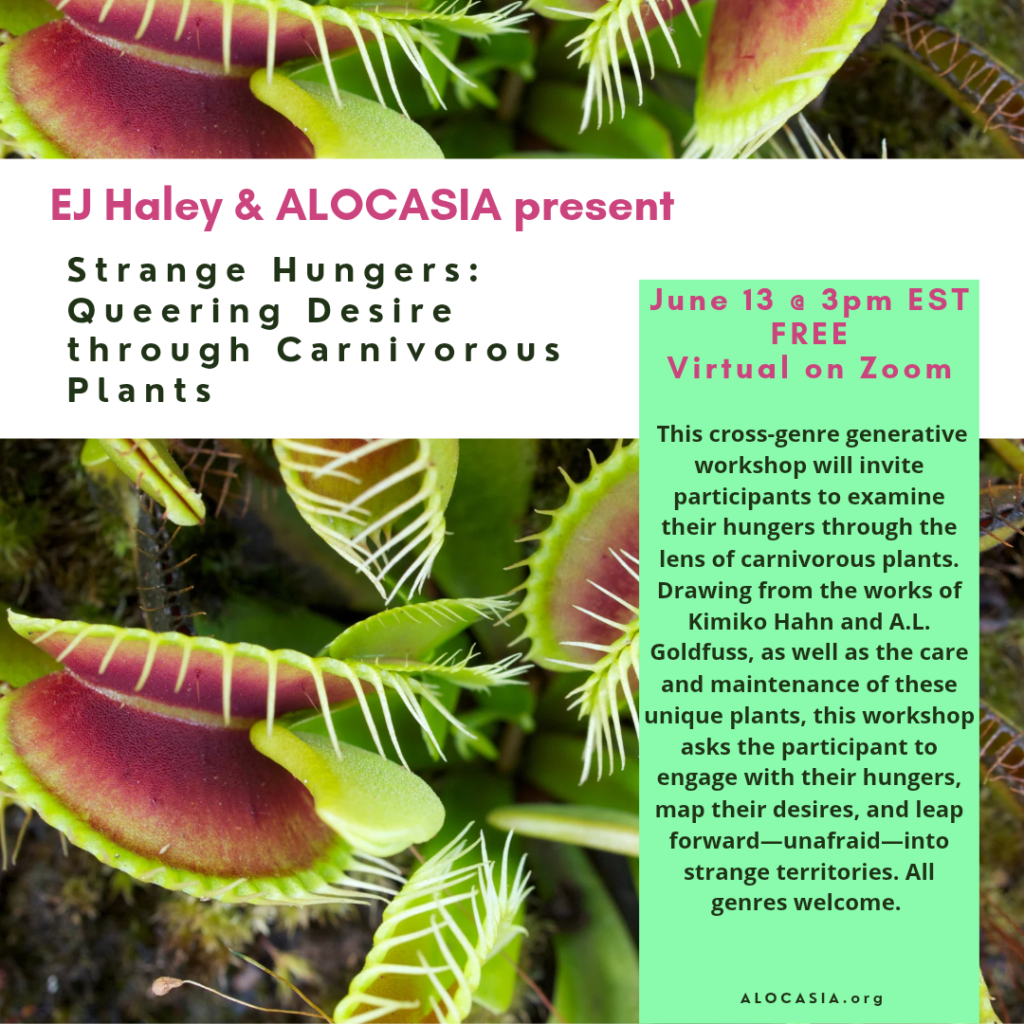
Strange Hungers: Queering Desire through Carnivorous Plants, with EJ Haley — June 13th, 3pm EST.
This cross-genre generative workshop will invite participants to examine their hungers through the lens of carnivorous plants. Drawing from the works of Kimiko Hahn and A.L. Goldfuss, as well as the care and maintenance of these unique plants, this workshop asks the participant to engage with their hungers, map their desires, and leap forward—unafraid—into strange territories. All genres welcome.
EJ Haley (they/them) published poems, essays, and short stories under a name that has since been retired. Their debut collection, Disastermath, is forthcoming from Airlie Press in 2027. They live and write in the Pacific Northwest.
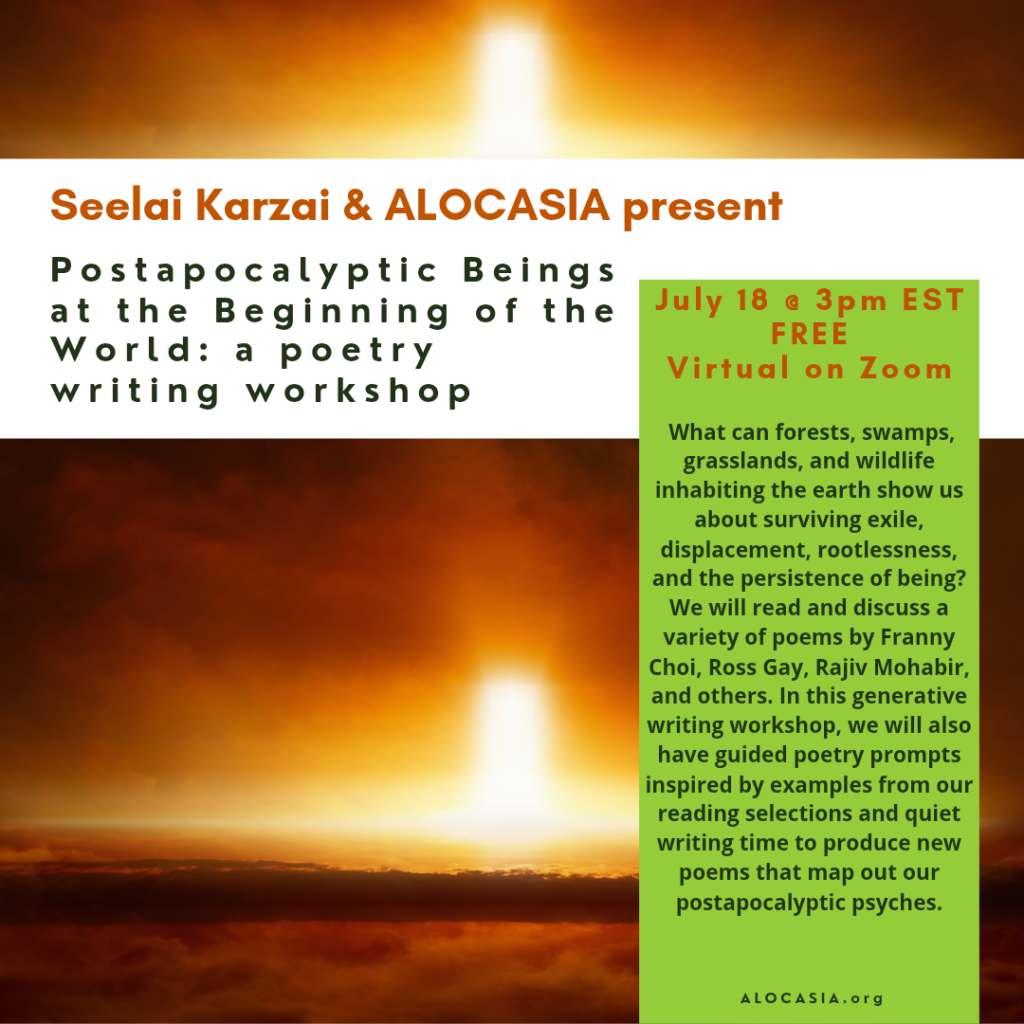
Postapocalyptic Beings at the Beginning of the World: a generative poetry writing workshop, with Seelai Karzai — July 18th, 3pm EST.
What can forests, swamps, grasslands, and wildlife inhabiting the earth show us about surviving exile, displacement, rootlessness, and the persistence of being? In “Forest Euphoria: The Abounding Queerness of Nature,” Patricia Ononiwu Kaishian asks, “Who am I to despair when my ancestors and the ancestors of my loved ones fought so hard to survive? Who am I to resign myself to some abstracted ‘end of times,” when people have been struggling against colonialism and genocide for hundreds of years?” Turning to the word “queer” as motivation, Kaishian “summons a spirit of camaraderie and a history of defiance.” It is in this spirit of defiance that we will read and discuss a variety of poems by Franny Choi, Ross Gay, Rajiv Mohabir, and others. In this generative writing workshop, we will also have guided poetry prompts inspired by examples from our reading selections and quiet writing time to produce new poems that map out our postapocalyptic psyches.
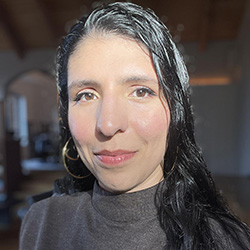
Seelai Karzai is a writer, educator, and cultural organizer whose work has appeared in The Massachusetts Review, Harvard Divinity Bulletin, What’s Afghan Punk Rock, Anyway?, and in the anthology New Moons: Contemporary Writing by North American Muslims. Her writing has earned the support of the Vermont Arts Council, The Seventh Wave, Muslim Counterpublics Lab, Poetry Foundation’s Incubator for Community-Engaged Poets, and the Virginia G. Piper Center for Creative Writing. A member of the Afghan American Artists and Writers Association, she is co-editor, with Sahar Muradi, of EMERGENC(Y): Afghan Lives Beyond the Forever War: An Anthology of Writing from Afghanistan and its Diaspora. Seelai earned an MFA from the University of Oregon and now lives on the unceded land of the Western Abenaki people in Vermont, where she is currently at work on a collection of poems.
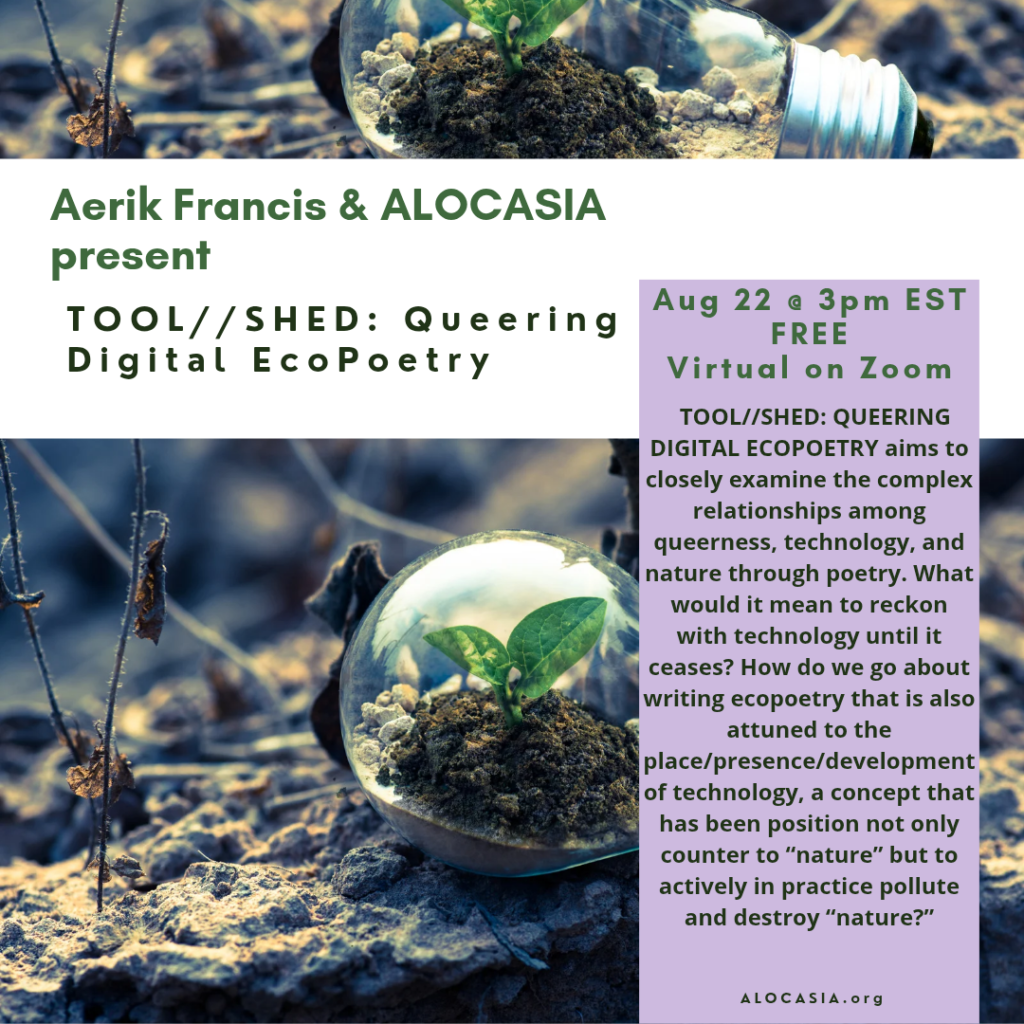
TOOL//SHED: QUEERING DIGITAL ECOPOETRY, with Aerik Francis — August 22nd, 3pm EST.
TOOL//SHED: QUEERING DIGITAL ECOPOETRY aims to closely examine the complex relationships among queerness, technology, and nature through poetry.
Writer Canisia Lubrin offers a revisioning of an often cited Audre Lorde quote:
When Audre Lorde says that the master’s tools cannot undo the master’s house… I think people.. miss the invitation to reckon with the master’s tool anyway, we have to reckon with it until it ceases to be the master’s tool.
What would it mean to reckon with technology until it ceases?
How do we go about writing ecopoetry that is also attuned to the place/presence/development of technology, a concept that has been position not only counter to “nature” but to actively in practice pollute and destroy “nature?”
In addition to reckoning with electronic devices, we’ll consider ekphrasis as a tool, technology, and technique toward linking concepts, exploring relationships, and putting words on the page, describing the “nature” we see from screens/frameworks/windows/limitations of modern technology.
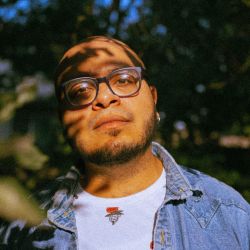
Aerik Francis is a Queer Black and Latinx poet & teaching artist based in Denver, Colorado, USA, and is currently serving as the second Adams County Poet Laureate. Aerik wants us to come together and gum up the gears of the machinery of the empire toward all of our collective liberation. They are the author of poetry chapbooks BODYPOLITIC (Abode Press 2026) and MISEDUCATION (New Delta Review 2023). Find more of their work on their website phaentompoet.com or via social media @phaentompoet.